


Big podcasts and large publications chase Bezos-level names who talk about strategy from 30,000 feet: it’s inspiring, yes, but useless if tomorrow you are walking into a meeting with your client and a deck to defend…
EDGE, a format by Consulting Intel, is where I sit down with world-class operators, consultants, and investors working between business, tech, and AI… and where I distill what I learn in something you can read in ~7 minutes.
LFG! 🔥
You are likely feeling the weight of the digital world: too much noise, too many buzzwords, and too few people willing to call out the obvious absurdities of modern business. That’s why I sat down with Tom Goodwin, one of the industry’s most influential, and deliberately contrarian, voices.
His philosophy is simple: most companies are built on flawed, historical assumptions, and they are simply not customer-centric.
Tom Goodwin is a highly sought-after writer, keynote speaker, and consultant.
Starting his career studying architecture and structural engineering, he spent a decade in major advertising agencies (including a role in “amateur futurism” sparked by a Nokia client) before setting up his own ventures. He is known for his ability to synthesize complex technological shifts into simple, provocative truths, often challenging the dominant narratives in marketing, technology, and organizational design.
Let’s jump into the conversation!
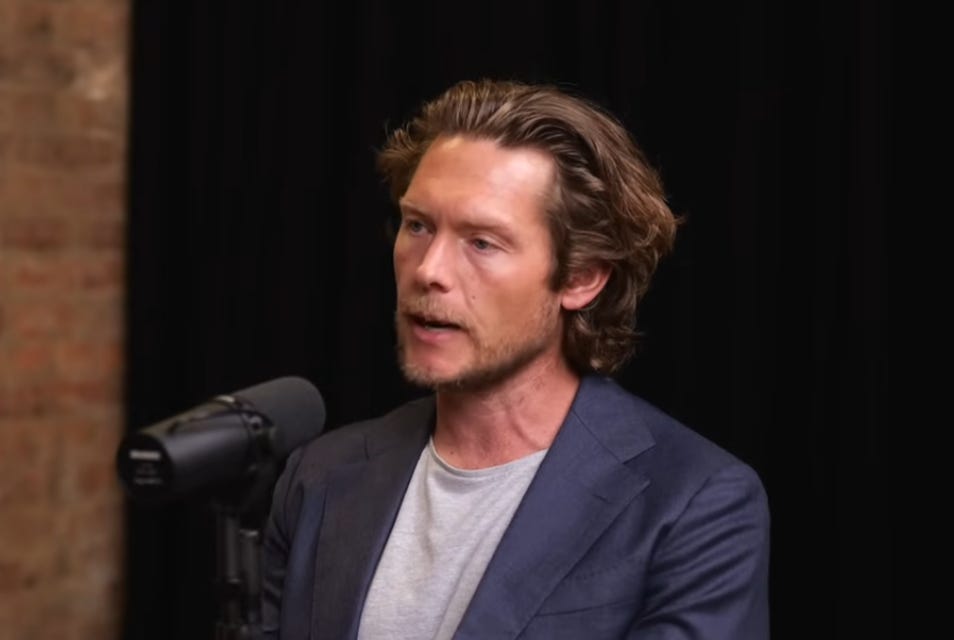
Origin Story
Tom’s career path was less a straight line and more a series of accidental shifts driven by innate curiosity… He started in structural engineering and architecture, a logical choice for someone that “always had a very curious mind.” When he graduated, he failed culturally in interviews for the typical high-status paths like investment banking and management consulting.
“I would look around the room and I would look at the people there, and I remember thinking these were not people that I would enjoy spending time with.”
He was advised to work in advertising, an industry he had never considered, and he quickly found his footing. Over time, his role became the one nobody else wanted: “I got given more and more weird jobs. So, my jobs became about doing the things that no one else knew how to do.”
The turning point was a huge miss. Frustrated that the best ideas developed for clients were outside the CMO’s power to execute, he naively left advertising to set up a consultancy called Tomorrow. It was focused on ambitious problem-solving for senior executives but “failed spectacularly” due to a lack of clients and credibility.
His core belief that emerged from this:
Curiosity is the engine, but public reputation is the fuel.
His writing, which started as a side-muscle on sites like Quora, gave him the credibility to return to the industry as a sought-after voice, transforming failure into a powerful new foundation for his personal brand.
Edge
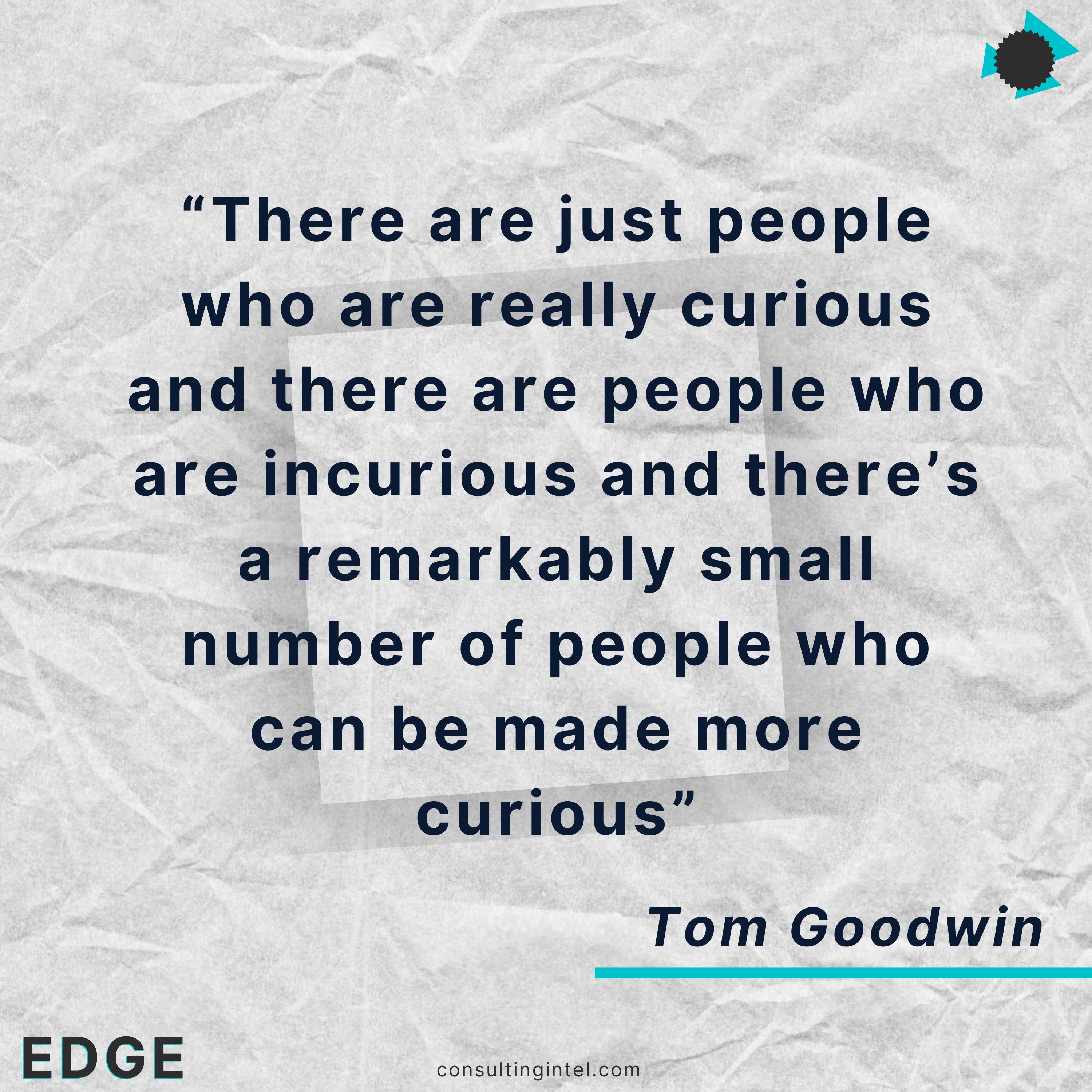
Tom’s unique edge is his commitment to rethinking assumptions, a practice he defines as the opposite of contrarianism.
His writing process is informal, fueled by the “irritation” he feels when he hears a common industry claim that he knows to be ridiculous (e.g., “no one watches TV anymore”). He deliberately avoids a rigid framework for the world to maintain an open perspective.
His work consistently centers on a critique of what he calls “company-centricity.”
“The opposite of customer centricity is being ‘company centric’... rooted in the industrial revolution’s focus on manufacturing efficiency, repetition, and internal KPIs.”
He argues that most companies treat customers with “disregard,” prioritizing internal process over the customer experience.
This explains why something as simple as buying a printer is an impossible task of navigating confusing nomenclature like “LFP 54 ZJ” vs. “LFP 93 PFQ.”
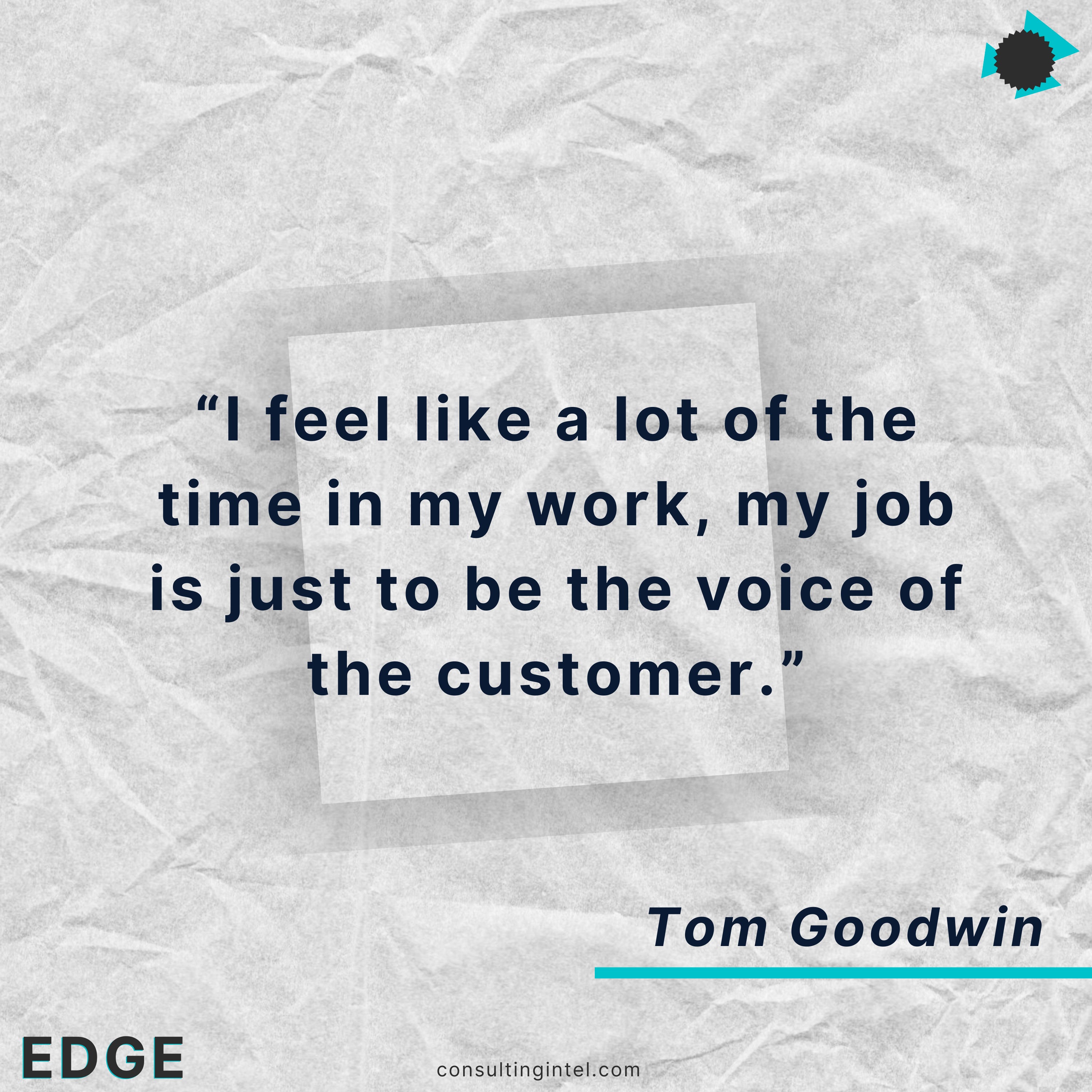
In his work, he sees himself as the necessary voice of the customer, introducing possibilities and imagination beyond a company’s past performance.
He collects his stimulus informally (e.g., voice notes while walking his dog, photos of signs, scribbles in a physical notepad) then waits for the ideas to “coagulate together” to form an article.
Future
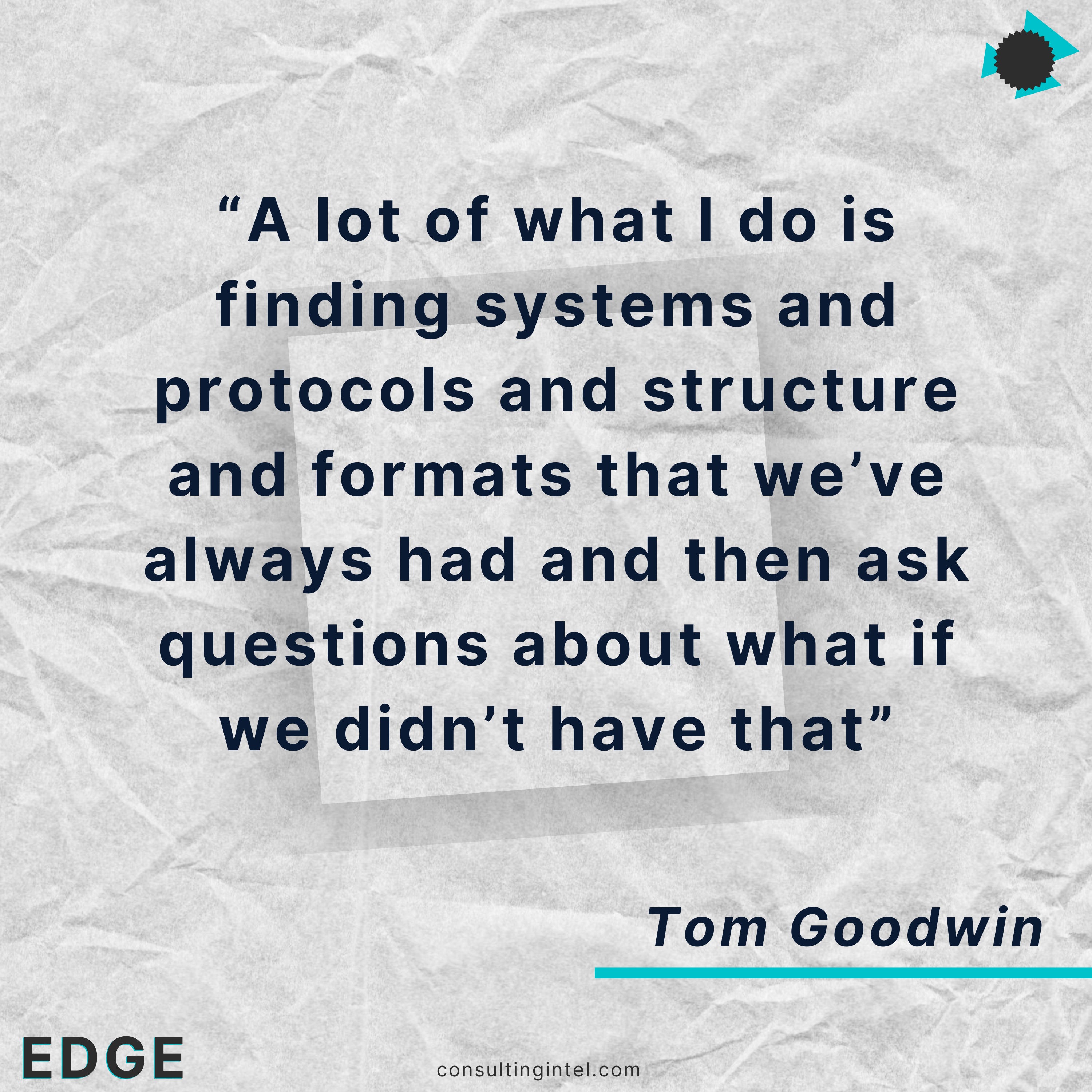
When discussing AI, Tom affirms its transformative potential, but cautions that it’s currently “extremely badly defined.”
He insists that its adoption will follow three stages, moving from simple acceleration to true transformation:
Easier and Faster (Next 2 Years): AI will be used to make small parts of existing jobs and processes faster and cheaper.
Better (2–4 Years): Companies will “re-orchestrate how they work,” restructuring and improving processes and software to achieve better ERP systems or different ways of handling invoices.
Different (Long-term): This stage involves a fundamental rethinking where processes are eliminated entirely. “Maybe we won’t send invoices anymore. Maybe people won’t be on as many meetings.”
He stresses that companies must not delay: every company needs to develop a formal AI strategy through a Global Head of AI or a task force, and every individual must be actively experimenting with the technology.
When asked for advice to his 19-year-old self, he gave a simple, profound prescription for overcoming the paralysis of a curious mind:
“Think a little bit less and do a little bit more.”
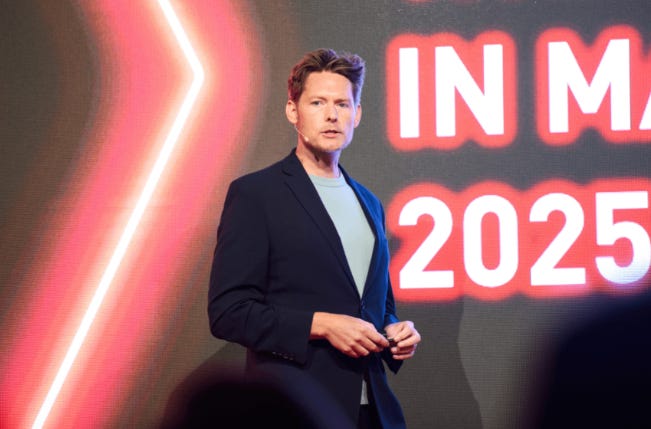
Grounding and Legacy
Tom is not a man of formal rituals, but rather a “way of being.”
This includes actively seeking out things that make him uncomfortable, buying magazines he normally wouldn’t, and doing a lot of writing daily. This lack of rigid routine is itself a reflection of his philosophy: a desire to maintain an open perspective and continuously challenge his own assumptions.
If given unlimited time and resources for a project outside his current work, Tom would tackle the problem of environment and well-being.
He would love to design and build “contemporary homes that are somewhat affordable and somewhat modular,” based on his belief that a healthy, green living space is “almost like a human right.”
This ambition reflects his core desire to be a voice for what the customer (or the citizen, in this case) truly needs, blending his initial roots in design and engineering with his developed passion for human-centered problem-solving.
🔹 What you can steal
Tom Goodwin’s approach is a toolkit for action in a confusing world. I will try to dissect it in three steps:
Start with Irritation: Instead of waiting for a breakthrough idea, let your writing or problem-solving process be fueled by a clear, specific annoyance at a common, lazy industry claim. Use that energy to question the status quo.
Be the Voice of the Customer: When reviewing any internal process or product, ask yourself: Where are we being company-centric? Look for the equivalent of a confusing printer name or a frustrating check-in process. That gap is where your real value lies.
Action over Analysis: If you find yourself in the same analysis loop, stop. Take Tom’s advice and “think a little bit less and do a little bit more.”
Action, even small, imperfect action, creates momentum and prevents the stagnation of over-thinking.
🔹 Maurizio’s Take
Tom’s true gift is his structural mind - honed by engineering - applied to creative problems. He doesn’t critique per se, he dissects the faulty wiring of organizational systems.
While Tom is skeptical that curiosity can be trained from scratch, he stresses it must be nurtured. Modern life, routine, and corporate dogma all work to “beat curiosity out of people”, so I agree that a good way to maintain it is to seek out what makes you uncomfortable and consume diverse, contradictory information to keep the muscle alive.
The most important takeaway, I believe, is this: Tom has built a career not on finding the “right” answers, but on consistently asking the better questions. Your future as a thought leader and a successful professional is not about what you know, but about your willingness to say: Wait a minute, I don’t think that’s true.
Most companies confuse being customer-responsive with being customer-obsessed.
They design processes to respond to immediate issues and feedback, but they fail to build a system where the customer’s logic is the primary source of design, not the secondary correctional input. This leads to the baffling, frustrating products and processes we all experience daily, where a company’s inability to change is packaged as “just how things are.”
Tom has the sharpest eye to detect such inconsistencies.
👀 Where to find more about Tom
If you enjoyed today’s conversation and read Consulting Intel, please do me a favor: share this post, spread the edge.
👋
⚠ Check these links out
My first book Beyond Slides became a #1 Amazon Best Seller in the USA, UK, Australia and Italy;
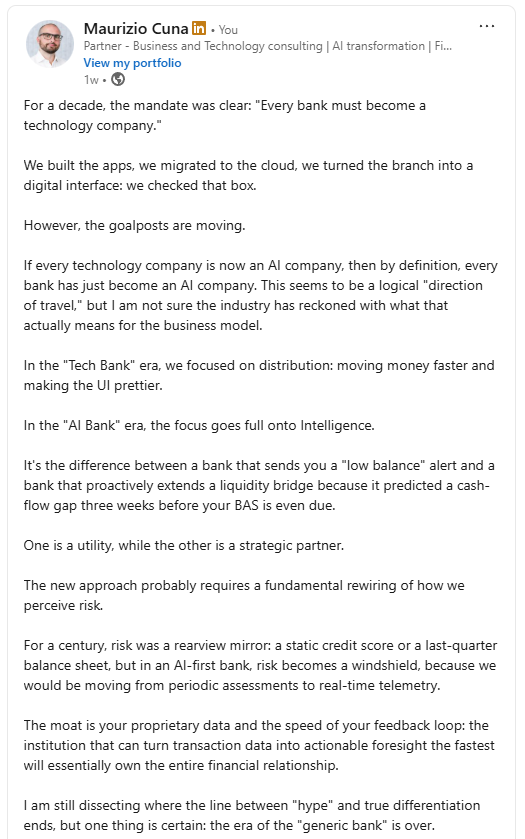
One of my recent posts on LinkedIn did a lot of views as I offered my views on how I think banks will have to change in the AI era. You may be interested:
The Leaders Toolkit is a deck of 52 tools, frameworks and mental models to make you a better leader (use code CONSULTANT10 for 10% off);
The Consulting Intel private Discord group with 250+ global members is where consultants meet to discuss and support each other (it’s free).

