


Big podcasts and large publications chase Bezos-level names who talk about strategy from 30,000 feet: it’s inspiring, yes, but useless if tomorrow you are walking into a meeting with your client and a deck to defend…
EDGE, a format by Consulting Intel, is where I sit down with world-class operators, consultants, and investors working between business, tech, and AI… and where I distill what I learn in something you can read in ~7 minutes.
LFG! 🔥
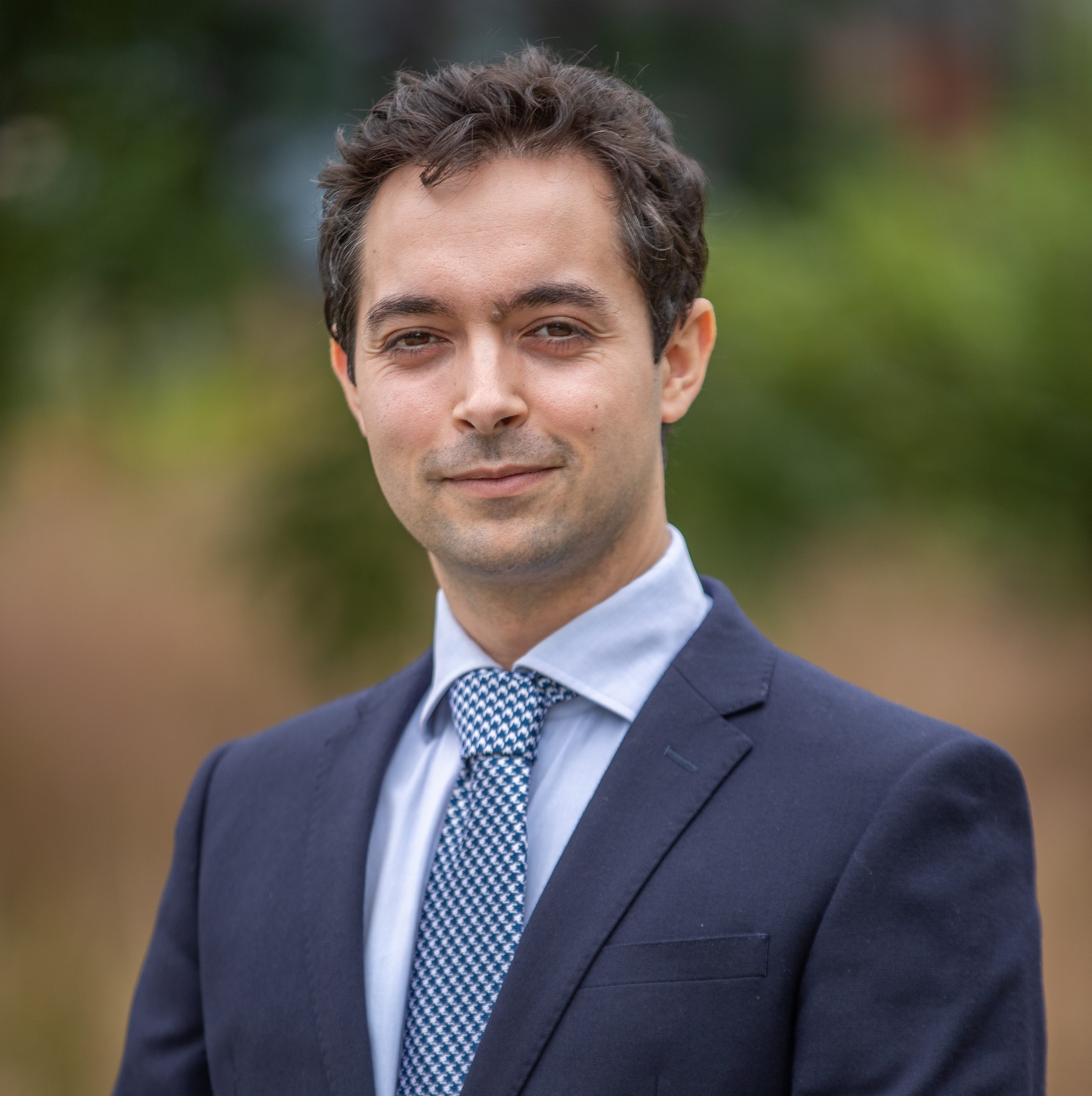
In an era that rewards the “hustle” and the superficial pivot, Andrea Chiarelli stands as a testament to a more traditional, rigorous path.
He is a man who transitioned from the cold, deterministic world of engineering into the nuanced, qualitative waters of high-stakes research consultancy.
The surprising claim at the heart of his philosophy is that structure is not the enemy of creativity but its primary accelerator.
Andrea is a seasoned management consultant based in Nottingham, United Kingdom, where he advises research funders, government departments, universities, and academic publishers.
He holds a PhD in Civil Engineering, an Executive MBA, and an MSC in Nuclear and Energy Engineering, alongside a history as an indie game developer and a passion for coding. He is the quintessential “T-shaped” professional, possessing deep technical mastery alongside an expansive strategic breadth.
Let’s jump into the conversation!
Origin Story
Andrea’s journey began in Alba, Piedmont (he is a fellow Italian) at a STEM-focused high school that refused to sacrifice the humanities for the sake of the lab. While other courses at the school focused mainly on a scientific curriculum, Andrea’s training included extra Latin, philosophy, and literature. This broad education contributed to building a holistic way of thinking, one that valued numbers but understood they were meaningless without a narrative.
As a teenager, he was deeply into Linux and open source software, obsessed with the custom assembly of computers and the granular control of his devices. Naturally, he intended to study Computer Science, but a glance at the curriculum revealed a massive deterrent: “too much mathematics.” He pivoted to Energy Engineering at the Polytechnic of Turin, only to discover that the advanced maths was still there, merely hidden under different module titles…
The defining moment of his early career came during his Master’s degree.
Standing in a lecture hall with 250 other engineering students, Andrea performed a cold, internal audit. He realized that if he followed the standard path, he would be one of hundreds of identical competitors in the local market. His first truly independent strategic decision was to seek an “edge” (and he was too young to know that, decades later, he would be featured on Edge!). He asked his thesis advisor to send him abroad.
He landed at Virginia Tech, in the United States, for six months, completely alone, knowing no one. It was a baptism by fire.
While supporting a doctoral student’s research, he observed the PhD lifestyle: the total intellectual autonomy, the ability to walk in and out of the office at will, and the deep pursuit of a single, fascinating problem.
That’s what led Andrea to applying for a PhD himself, and eventually landed him to Nottingham - where he lives now.
Edge
Andrea’s differentiator is his ability to apply the rigorous structural thinking of an engineer to the qualitative challenges typical of the policy sphere.
Most people view structure as a cage; Andrea views it as a map.
He segments vast, complex problems into their constituent elements, examines the structural connections, and explores them one by one.
This “Edge” was forged through a couple of radical shifts that forced him to abandon his comfort zone repeatedly:
During his PhD in Nottingham, Andrea studied “energy harvesting”: extracting heat from sun-baked asphalt. While his experiments ran in the lab, he refused to sit idle. He sat in the office programming in MATLAB and wrote scientific articles on the “physics of stone compaction” and “porosity networks”, topics barely related to his thesis.
Nearing the end of his PhD, he realized he had no work experience. He found a part-time role at a nascent boutique consulting firm (then just a founder and two part-timers) specializing in the research and higher education space. He was the firm’s first full-time employee.
His engineering background meant that he had to upskill himself and learn the nuances of qualitative research. Eventually, this expanded his toolkit, building a well-rounded “Mixed Methods” approach.
He recently developed a Claude Code pipeline to automate “thematic coding” (a task that usually consumes hundreds of hours of a consultant’s time), thanks to this blend of quantitative and qualitative expertise. By automating the “tagging,” he frees himself to perform the “synthesis”: the high-level storytelling that clients actually value.
Future
As a strategist who reaches the daily usage limits of Claude Pro multiple times a day, Andrea is an heavy user of generative AI, but with a healthy dose of skepticism.
He views Generative AI as a “three-year-old child”: imaginative, fast, but prone to “telling you about a dream as if it were reality.” This comes from his role: as a consultant who needs to take responsibility for each and every claim, trust is paramount.
Andrea identifies a looming crisis in the talent pipeline, but he argues the impact may depend on the size of the firm.
In the world of large enterprises, the crisis is obscured by layers of bureaucracy and short-term thinking. Andrea notes that large companies rarely think beyond a three-year horizon because the life cycle of a CEO is so brief. For these giants, the immediate financial gains of using AI to replace junior labor are intoxicating. However, they are effectively creating a “leadership vacuum” fifteen years down the line. Without the “grunt work” that develops a professional’s critical eye, these firms will eventually find themselves in a war for senior talent that is increasingly scarce.
In small firms, the threat is existential and immediate. Andrea explains that in a boutique consultancy, talent development is not a HR “perk” but an essential “succession planning” strategy. If a small firm fails to coach its juniors, the current directors can never dream of an “exit.” There is no one to take the reins when they retire.
To address this, Andrea’s firm has taken a deliberate step: they now record time in their accounting systems specifically for (human) coaching. They are consciously choosing to spend “unproductive” hours passing on the critical thinking skills that AI cannot replicate.
Grounding and Legacy
Alongside his senior strategic role, Andrea remains grounded through daily rituals that favor the personal over the professional.
He is a voracious reader, a habit formed as a teenager on the beaches of Italy reading stuff like Ken Follett’s The Pillars of the Earth. Today, he writes on Substack every morning while his four-year-old son eats breakfast.
His life is a cross-cultural tapestry: his wife is Moroccan, and their household is a blend of Mediterranean roots and British customs. This “openness” and willingness to embrace other cultures is something he considers a hidden asset, a willingness to connect with the world emotionally as well as intellectually.
If granted unlimited resources, Andrea would not buy a tropical island or a million-dollar supercar. Instead, he would build a “Technological Sanctuary”: a home outfitted with every possible gadget (a nod to his early tech days), and spend his days volunteering his time to support his local community.
🔹 What you can steal
Andrea’s approach can be articulated in 3 high-level tactical concepts:
When you use AI to “save time,” do not just celebrate the efficiency; audit the cost to your own development. Ask yourself: “Am I skipping a task that is a prerequisite for my future growth?” If the work is “donkey work” (e.g., the mindless tagging of data or formatting of tables) automate it without hesitation. However, if the task builds your “critical eye” (e.g., the drafting of a core argument or the initial interpretation of a client’s needs) you must do it manually. Using AI as training wheels is fine for the first block, but to finish the race, you eventually have to take them off and feel the balance for yourself.
When a client presents a complex problem, do not seek a holistic solution immediately. Deconstruct it into its constituent parts. Map the specific elements, the channels of influence (like the porosity networks that Andrea was studying) between them, and the blockages that stop progress. By addressing the granular components individually, as well as their connections, you ensure that the final “narrative synthesis” is built on a foundation of structural integrity rather than superficial eloquence. Clarity comes from the assembly of well-understood parts, not from a single stroke of genius.
Never allow yourself to be defined by a single job title or a narrow vertical. Andrea’s “Edge” comes from being an engineer and a programmer and a writer and a student of the humanities. In an AI world, technical skills have a shorter half-life than ever before. Your only protection against obsolescence is the “and”: the ability to synthesize insights from disparate fields that an algorithm cannot yet connect with the same level of depth and understanding. Diversity of thought is your primary strategic asset; seek out the “useless” knowledge that your competitors are ignoring.
🔹 Maurizio’s Take
Andrea’s strength is rooted in a conscious refusal to “simply do what the system expects.”
He spent years in the “slower, deliberate” world of academia, which he felt was frustratingly stagnant for his personality, yet he recognizes it as the source of a “critical toolkit” that no weekend seminar could replicate. His brilliance was in realizing when the system was no longer serving him.
He rejected the academic mandate to become a “post-doc nomad”—moving to three different countries to meet the expectations of today’s universities—and instead chose to leverage his elite training in the private sector.
In a world obsessed with “minimum viable products,” Andrea is a proponent of the “Maximum Viable Foundation.” He built a moat out of seemingly disconnected knowledge (stone compaction, Latin, complex calculus, business administration) that allows him to see patterns that others miss.
He proves that the most “efficient” path, specialization, can be dangerous, because it leaves you with no footing when the environment changes.
👀 Where to find more about Andrea
If you enjoyed today’s conversation and read Consulting Intel, please do me a favor: share this post, spread the edge.
👋
⚠ Check these links out
I had the opportunity to try the AI-slide builder Perceptis ahead of their public launch, and I was so impressed! Unlike other apps I have tested before, this one actually builds good slides with a structure, starting from a simple prompt. Try it for 10 minutes and let me know what you think.
My first book Beyond Slides became a #1 Amazon Best Seller in the USA, UK, Australia and Italy;
The Leaders Toolkit is a deck of 52 tools, frameworks and mental models to make you a better leader (use code CONSULTANT10 for 10% off);
The Consulting Intel private Discord group with 250+ global members is where consultants meet to discuss and support each other (it’s free).

Why have I missed your EDGE format, Maurizio?!
Will need to read all the posts I have not read!
Love the shared Italian education system / experiences to give you both such rounded (and grounded) perspectives.
Nice feature.