


Big podcasts and large publications chase Bezos-level names who talk about strategy from 30,000 feet: it’s inspiring, yes, but useless if tomorrow you are walking into a meeting with your client and a deck to defend…
EDGE, a format by Consulting Intel, is where I sit down with operators, consultants, and investors working between business, tech, and AI… and where I distill what I learn in something you can read in ~7 minutes.
LFG! 🔥
Venture capital looks glamorous until you notice the people doing the real work: the ones who do not confuse power with wisdom.
Tak Lo is one of those people.
From the U.S. Army into defense consulting, then a MBA at London Business School, Techstars London to the Zeroth AI accelerator, to then end up running multiple funds across AI and crypto, and finally working as a teacher of kids and MBAs.
The resume is long, and the philosophy is sharper.
The contrarian hook for you: Tak treats founders not as “customers,” but as assets you must steward exceptionally well, while recognizing the actual customer is the LP. And he believes the best VC help is 1% well-timed framing… and 99% getting out of the way.
He is, in his words, a financier and a teacher. That pairing, capital allocation with ethical scaffolding, turns out to be rare, and useful.
Let’s jump into the conversation!
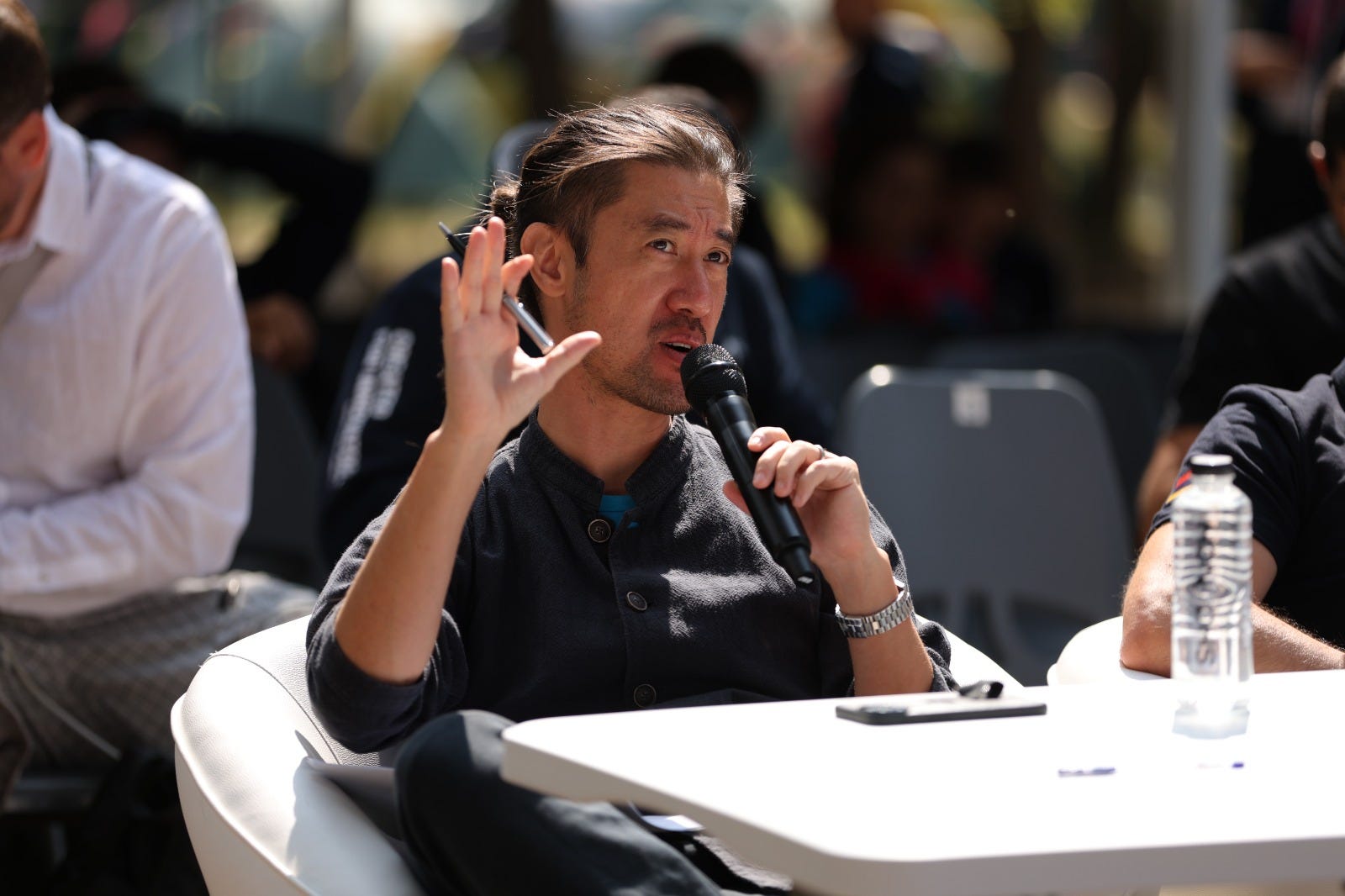
Origin Story
Born in Hong Kong, raised across the U.S. and Asia, Tak started in the U.S. Army, shifted into defence consulting, then jumped the fence into startups via LBS and Techstars.
The Army gave him discipline and a blueprint for leadership under uncertainty; consulting gave him the habit of turning chaos into frameworks.
The turning point was not a single blow-up but a slow realization: power warps judgement. In venture, lines blur at late dinners, hot rounds, thirsty egos. Without boundaries, the job will bend your ethics and your calendar until both snap.
That is when he chose a different posture: measured, coach-like, harder to corrupt.
The belief that stuck: intellectual work > interference.
You do not rescue entrepreneurs by becoming their part-time COO. You strengthen them by helping them see, decide, and own.
Edge
Tak’s edge is deceptively simple: allocate capital; allocate attention even more carefully.
He optimizes for two scarce resources in startups:
founder focus;
ethical clarity.
The first is protected by eliminating performative “value-add”, the second is protected by hard personal rules about time, settings, and power dynamics.
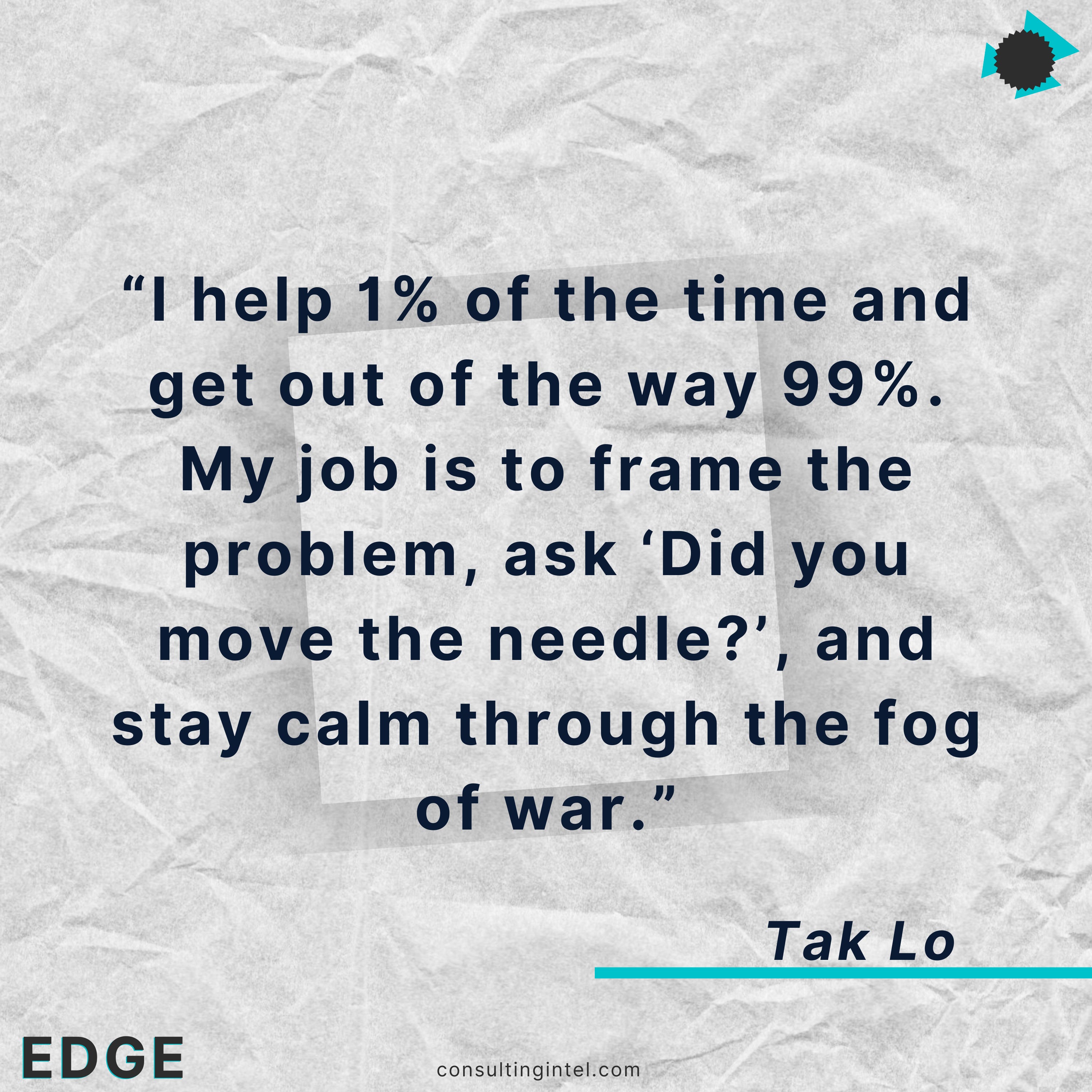
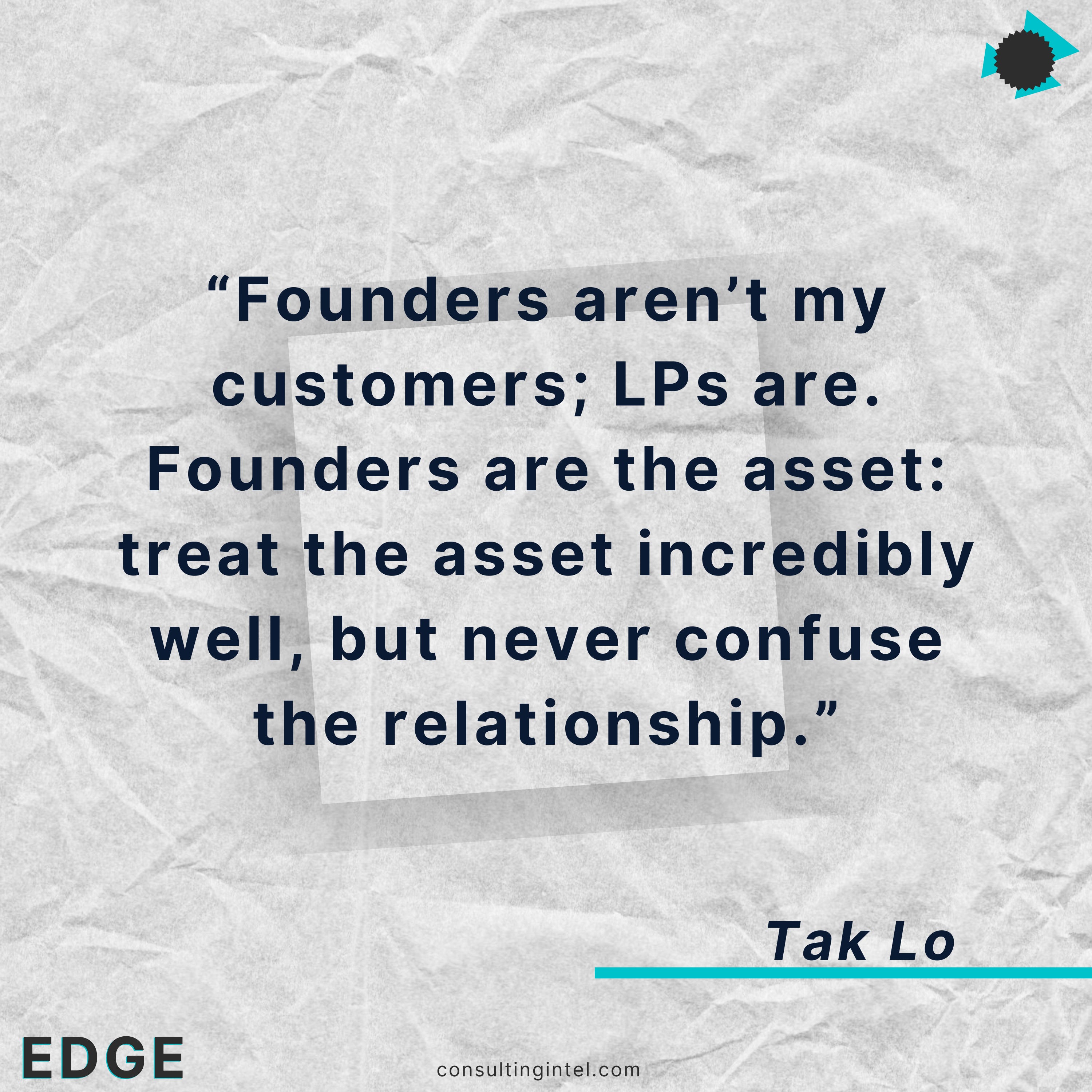
He is blunt about it: the startup founder is not the customer. The LPs who supply capital are. The founder is the asset (the horse you train, care for, and keep healthy) because without that, there is no return.
Confusing the two creates distorted behavior: overhelping, overpromising, or worse, forgetting who actually pays the bills.
His second differentiator is a refusal to operate.
Many VCs drift into acting like part-time executives. For Tak, that is a trap.
99% of the time, the right move is to get out of the way. The 1% is about timing: a frame at the right moment, a push when a founder is on the cusp, an introduction that shifts probability. He tells the story of a peer who held weekly check-ins lasting only 15 minutes, asking two questions: “Did you move the needle?” and “What were your 10x decisions?”
That is the essence of his method: cut through the noise, surface what matters, and walk away.
The discipline comes from the Army (“calm in the fog of war”) and consulting (“frameworks that simplify the mess”). The empathy comes from coaching over a hundred founders across geographies and industries.
His edge is not sector depth, but breadth, resilience, and consistency. He is not the guy who claims to know SaaS sales better than you; he is the guy who will stand in your corner when your world is falling apart, unshaken, asking sharper questions than you dare ask yourself.
Where it succeeds: with resilient CEOs who need a steady hand and a reframed question, not an extra operator in the room.
Where it fails: in companies where the business model itself needs surgery. Tak will not be your interim CRO, and he is fine with that.
Future
On AI, Tak is boring in the best way: ubiquity beats hype. Like the calculator and the PC, AI will be everywhere, but the marginal impact is bigger, faster, and riskier.
He compares it to the printing press and the computer, but with one critical difference: the slope of change is steeper. Generative AI is “the Internet’s knowledge at your command.”
That is power, and danger.
What worries him is not the technology but how humans use it. He teaches AI at schools and universities, and even to his kids’ classmates. His focus is on helping young people learn how to work with AI without outsourcing their thinking to it.
“The Economist wrote that Gen Z can’t think without AI,” he says. “That is the danger. If kids start every question with, ‘Let’s see what AI says,’ then they stop exercising their own mental muscles.”
He argues for installing ethical principles and approaches early. Just as it took 15 years to regulate social media, we cannot afford to sleepwalk into the same mistakes with AI. His mission is to buffer kids’ minds so they can harness AI, but with skepticism, patience, and sovereignty.
Who thrives: operators who can hold two truths at once: use AI relentlessly, but retain independent thinking.
Who disappears: those who abdicate all cognition to prompts.
I always ask a question to my guests. What would you suggest to your younger self? Tak answer is remarkably cool: be ferocious on the daily, but relaxed on the arc.
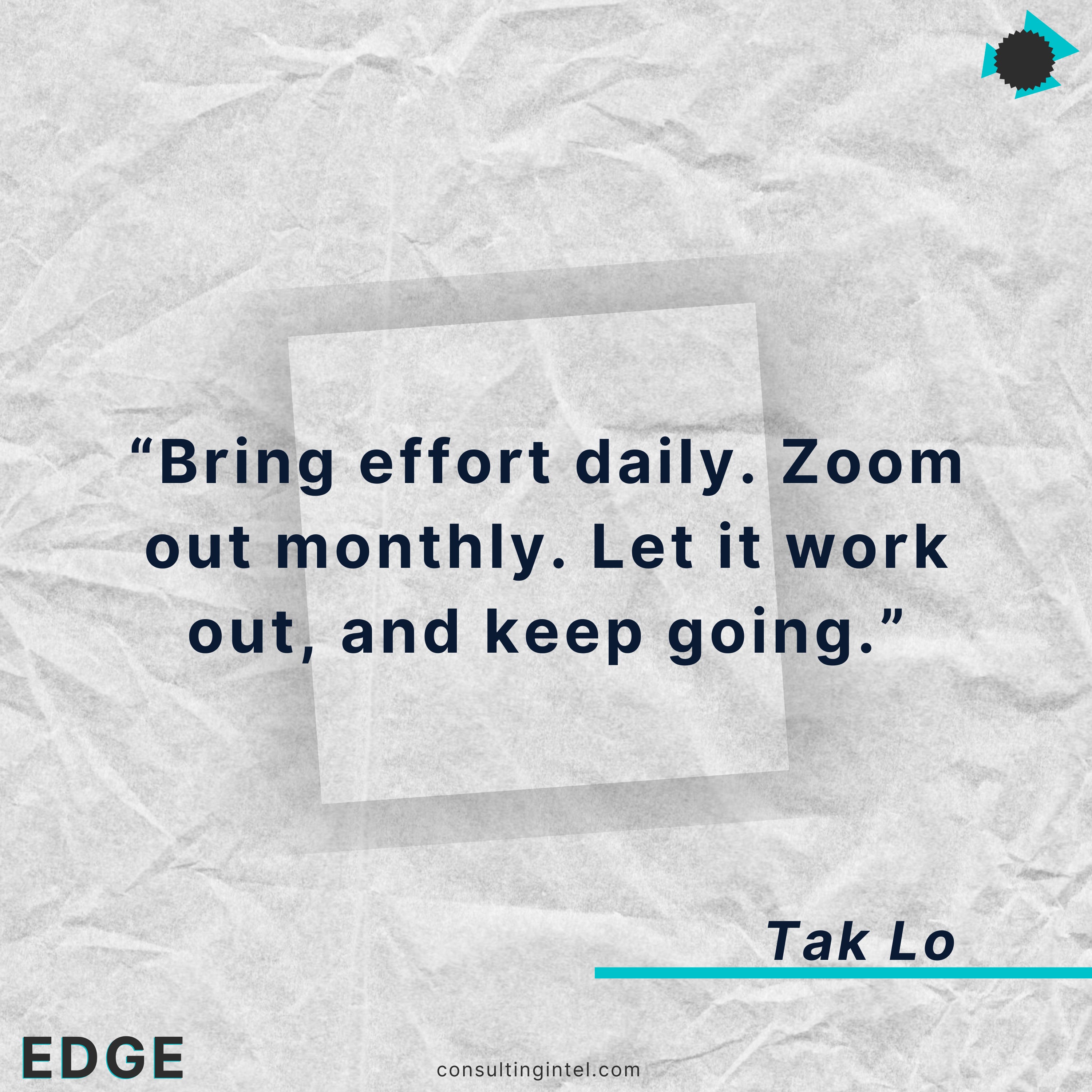
“Bring effort daily. Zoom out monthly. Let it all work out.” He borrows from football to illustrate: players cut at 12 who rejoin the team at 25, because grit plus time eventually repays.
His own career, jagged as it looks, is proof of that rhythm.
Grounding and Legacy
Sundays in the Lo household are sacred: no nanny and no plans! Boredom is intentional.
There is rugby in the morning, board games, and an Italian kitchen in the afternoon: pomodoro (tomato sauce, for the uninitiated) simmering, guanciale on standby, baked pasta that would pass in Palermo.
Weeknights aim for family dinner, debriefs of high/low moments, and the kind of repetition kids turn into roots.
If Tak had unlimited time and capital, he is very clear on what he would do. He would own a sports team, either an innovative new-sport franchise or a community club in Italy!
Not just for football. For community as a practice: showing up, building belonging, earning dinners. This is the through-line: teach, anchor, compound.
Wealth as stewardship plus power with boundaries.
🔹 What you can steal
First, adopt the 15-minute needle test.
Weekly, ask yourself or your team: “What truly moved the needle? What were our 10x decisions?” Then stop talking. If you cannot name them, you did not have them.
Second, separate customer from asset in your world.
Who actually pays you? Who must be stewarded? Treat both with respect, but optimize for the right one. That single clarification eliminates half of your political confusion.
Third, install ethical guardrails before you need them.
Decide in advance which meetings you will not take, which hours you will not cross, which behaviors trigger a hard stop. Boundaries are easier to keep when they are written, not improvised.
🔹 Maurizio’s Take
Tak’s edge is restraint with teeth.
In a scene addicted to hands-on meddling and “value-add performance”, he chooses calm framing, hard triage, and moral hygiene.
It resonates with my own view of leverage: real leverage is removing noise, not adding interventions (when in doubt, always go via negativa).
What I find powerful is how his approach in venture capital mirrors what good consultants do in boardrooms. The best consultants do not try to run the client’s business for them. They frame problems sharply, and leave the ownership where it belongs. Tak has simply carried that operating logic into venture.
The other thread worth noting is his obsession with teaching. Whether AI to 10-year-olds or frameworks to CEOs, the through-line is the same: give people mental frameworks, not answers. That is rare in finance, an industry that often rewards opacity. His edge is to make things clearer, not more complex.
There is also something refreshing about his candor on ethics. Many investors talk about returns, few talk about self-awareness at 2am dinners. Tak does. In a field that excuses questionable behavior in the name of deal flow, that matters. He is right: without hard boundaries, power will warp even the most principled operator.
For me, the takeaway is important: the more powerful your tools (capital, AI, title), the more disciplined your boundaries must be. Otherwise the tool starts using you.
One thing I will take with me from the conversation with Tak is that, in a world racing to do more, the scarce advantage is the leader who knows exactly when not to touch the system, and can prove it with outcomes.
👀 Where to find more about Tak
If you enjoyed today’s conversation and read Consulting Intel, please do me a favor: share this post, spread the edge.
👋
⚠ Check these links out
My first book Beyond Slides became a #1 Amazon Best Seller in the USA, UK, Australian and Italy;
I had the opportunity to be an advanced reader for the upcoming book by my friend Kevin Ertell The Strategy Trap. He has done an excellent job at simplifying an otherwise complex subject, that people with decades of experience still do not understand. The book is well researched (which I like) and full of relatable stories. Follow Kevin Ertell and his newsletter The Strategy Trap Newsletter!
The Leaders Toolkit is a deck of 52 tools, frameworks and mental models to make you a better leader (use code CONSULTANT10 for 10% off);
The Consulting Intel private Discord group with 250+ global members is where consultants meet to discuss and support each other (it’s free).

Thank you for sharing. Amazing insights in business and in life.
Tak sounds amazing. Thank you for sharing his wisdom. I really appreciate his teaching approach.
And thank you so much for sharing my book!