


The history of business is a constant pendulum swing between two forces: bundling and unbundling.
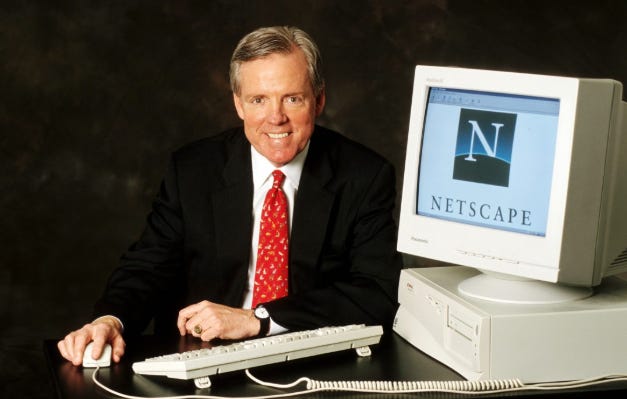
As Jim Barksdale, the former CEO of Netscape, famously said: “There are only two ways to make money in business: bundling and unbundling.”
Perhaps the most famous example of unbundling in internet history is Craigslist.
In the late 90s, Craigslist was the ultimate bundle.
It had everything: jobs, apartments, used cars, personals, and tickets, all on one text-heavy website.
Entrepreneurs, however, realized they could build a better experience by picking just one section of Craigslist and making it a standalone company:
Airbnb unbundled “Short-term rentals”;
Zillow unbundled “Real estate”;
Indeed/LinkedIn unbundled “Jobs”;
StubHub unbundled “Tickets”.
These companies focused on a specific niche, and managed to provide significant more value than the generalist “bundle” ever could.
A decade ago, in the banking sector, monolithic legacy systems handled everything from core ledgers and CRM to payments and billing under one (often clunky) roof.
Then, the fintech revolution arrived.
We noticed that a specialized platform (like Stripe for payments or Salesforce for CRM) could outperform a generalist suite every time, and we decided to unbundle the bank.
The “Cable TV” unbundling of media and entertainment is playing up right now.
For decades, the Cable Package was the king of bundling. You paid one monthly fee to Comcast or Time Warner and got 200 channels, even if you only watched five of them.
At some point, services like Netflix, Hulu, and Disney+ allowed us to “cut the cord”: we unbundled the channels and paid only for what we wanted.
Today, because consumers are tired of managing 12 different subscriptions, we are seeing “bundles” return through services like Disney+/Hulu/ESPN+ or Apple One.
Bundles offer convenience; unbundling offers choice.
In 2026, we are witnessing a new, more profound type of unbundling, the one happening to us. AI is currently in the “choice” phase: breaking jobs down into specific, high-performance tools.
The great job unbundling
With Generative AI, we are (re)discovering that a “job” is really just a bundle of tasks.
Some of these tasks require deep human empathy and strategic intuition, while others are repetitive, data-heavy, administrative, and very boring.
According to Gartner’s 2026 predictions, 40% of enterprise applications will feature task-specific AI agents by the end of this year. This means the tools for unbundling are no longer experimental but (kind of) the new standard.
As AI matures, we are seeing the emergence of two distinct groups of knowledge workers. Your position in the next three years depends entirely on which group you choose to join today.
Group 1: The Augmentoooors (The “10x” Workers)
This group views their job description not as a static title, but as a collection of modular tasks. These people are actively unbundling their own roles to see what AI can handle.
They experiment relentlessly. They don’t just “use ChatGPT”; they build custom GPTs for their specific workflows, use Perplexity for deep-dive research, and automate their meeting notes with tools like Otter.ai or Fireflies.
According to a study by Harvard and BCG, consultants using AI finished 12.2% more tasks on average and completed them 25.1% faster, with 40% higher quality results than those who didn’t.
Their productivity skyrockets because they offload the “drudge work” and have more time for high-level creative thinking.
Group 2: The Traditionalists (The Vulnerable)
This group sees the pace of innovation as a threat or a distraction.
They feel that their “style” of working is what makes them valuable, and they resist adapting their workflow to new tools.
By refusing to unbundle their tasks, they remain tethered to low-value activities that AI can now do in seconds!
Research from Goldman Sachs suggests that generative AI could automate up to 300 million full-time jobs globally. However, “automation” rarely means a robot takes your seat; it means your tasks are absorbed by someone more efficient. PwC’s 2026 predictions note that leadership is shifting toward top-down AI programs that target high-value workflows.
If you are not the one identifying these opportunities in your role, your organization likely will…
I still think AI won’t steal your job (but there is a catch)
There is a popular phrase circulating: “AI won’t take your job, but a human using AI will.”
While it sounds like a LinkedIn cliché, the mechanics of it are quite cold. If an “Augmentoooor” can perform their own tasks plus 60% of yours because they have automated the baseline work, the economic rationale for keeping both roles vanishes. Your tasks don’t disappear per se, but they converge into the workflow of the more productive person.
Example: The Content Marketer
A Traditionalist content marketer spends 4 hours researching, 4 hours drafting, and 2 hours formatting a single blog post. Total: 10 hours.
The Augmentoooor content marketerer uses AI to scrape research data, generates 5 distinct outlines, uses a LLM to draft sections, and uses AI-driven SEO tools to optimize. Total: 2 hours.
It is clear to me that the second person can produce 5 times the volume at the same (or higher) quality.
The Traditionalist is both slower and economically non-viable.
The 2026 “Task Audit” Checklist
I believe the great unbundling of work is inevitable: we are moving toward a future where “role” matters less than “output efficiency.”
I routinely ask myself a very simple but powerful question:
Which of my daily tasks are “low-hanging fruit” for AI?
If you don’t unbundle them and automate them yourself, eventually, the market will do it for you, and it might give those tasks to someone else.
To help you move from Group 2 to Group 1, run this audit on your workweek:
Identify the “Loops”: Which tasks do you do at least three times a week? (e.g., status updates, data cleanup, email triaging, etc). These are prime candidates for Agentic AI.
The “2-Minute Rule” in Reverse: If a task takes you 30 minutes but involves 0% original thought (like summarizing a meeting), it should be unbundled. Now!
Tool Mapping:
For Coordination: Use Motion or Reclaim.ai to automate your schedule.
For Synthesis: Use Otter.ai or Fireflies to unbundle “note-taking” from “listening.”
For Creation: Use Jasper or Copy.ai or WisprFlow to handle the “blank page” problem.
Skill Gap Check: Do you know how to “orchestrate” an agent? If not, spend 1 hour this week on a prompt engineering or AI orchestration tutorial. Then, listen to these 2 interviews (and, in general, everything produced by Dwarkesh Patel to be in the middle of the AI conversation):

We have some work to do, folks!
As usual, if you enjoy reading Consulting Intel, please do me a favor: spread the word and share this post.
👋
👀 Links of interest
A few corners of the internet you may find interesting:
My first book Beyond Slides became a #1 Amazon Best Seller in the USA, UK, Australian and Italy. This is a message I received the other day from a new reader:

Have you looked into the Leaders Toolkit? It is a deck of 52 tools, frameworks and mental models to make you a better leader (use code CONSULTANT10 for 10% off);
The Consulting Intel private Discord group with 250+ global members is where consultants meet to discuss and support each other (it’s free).

I like this - it is a useful step forward in understanding how AI will change work. There are several stages beyond this. Most important, when AI looks at the objectives and outputs of any business, it will likely devise entirely different ways to do things. All those unbundled tasks will simply vanish. What then emerges is a different organisation structure and entirely different roles.
My guess is there will be many more jobs than exist today. The challenge is helping people manage through the transition. All the talk of mass unemployment is just wasting attention on the wrong risks.