


After twenty years in this industry, I have come to a startling realization: the fundamental physics of professional services have changed.
For two or three decades, we watched the big players operate on a craft model, where success was measured by the scale of the headcount and the number of hours billed.
Although public announcements emphasized high-level strategy and elite capabilities, the operational reality was often far more utilitarian. Many firms, in many ways, were in the business of body shopping: the practice of renting human intelligence by the hour to provide the sheer volume of labor that clients could not (or would not) maintain themselves.
But as I witness the latest advancements in artificial intelligence, I am becoming convinced that this era is over.
I am seeing a forced transition from the Craft Model to the Industrial Model: a world where we no longer sell the brilliance of people, but the precision of AI-powered business outcomes.
A lot of smart people in my industry still use ChatGPT and similar GenAI platforms purely to write more polished emails; they use artificial intelligence merely as a tool for efficiency. But AI is rapidly becoming a force pushing the value of traditional analysis to near zero.
You and I know this - perhaps we are in a bubble, but that bubble is going to get bigger.
If a firm persists in selling inputs (the infamous “We will give you 30 analysts for 12 months to implement these 3 SAP modules”), it will eventually find itself irrelevant.
To survive, the industry must undergo a radical reshuffling.
I have identified 5 core tenets of this change, the strategic pillars upon which we must build our next decade.
1. Moving from Capability to Outcome
Traditional consulting sold “inputs.”
A client paid for a certain number of hours or a specific technology implementation.
In the new epoch, clients do not want to buy an implementation; they want to buy a “Re-imagined Finance Function” or a “Self-Optimizing Supply Chain.” The to-be consultancy must have skin in the game, moving from being a vendor of labor to a partner in results. This means defining the vision, executing the roadmap, and monitoring the long-term performance of the business function itself.
We will no longer be paid for what we do; we will be paid for what we achieve.
This time for real…
2. Codifying expertise
For many many years, knowledge lived in the minds of senior partners or within static archives of past presentations.
This is a fragile and inefficient way to store intellectual capital, not to mention that no consulting firm on earth has ever managed to achieve that goal entirely.
Professional service firms must now build a proprietary internal tech engine, with artificial intelligence and data becoming the operating system of the firm. By codifying expertise into an engine, firms can automate “lower-level” work (eg, research, data cleaning, basic synthesis) at a marginal cost that approaches zero.
This allows human talent to ascend to roles of high-level thinking and strategic business and technology architecture.
3. Redesigning “management”
The traditional consulting structure is plagued by silos. A single client is often approached by separate teams for strategy, Data, HR, Cloud, and Operations, each with its own overhead and duplication of effort.
There is so much wasted effort going into managing these disparate offers, and it is an artifact of a pre-AI world.
The new mandate is a sort of Unified Client Interface, where firms stitch these silos into integrated business domains. By doing so, they reduce managerial complexity and present a single invested partner face to the clients, resulting in leaner teams, faster delivery, plus a near-total elimination of bureaucratic friction.
4. Going vertical over horizontal
Artificial intelligence is a superlative generalist. It can summarize, prepare decks, and manage basic projects with ease. Consequently, the “Generalist PMO” is an endangered species.
I may be biased here, but I believe the future in our industry belongs to the Vertical Specialist, the individual who possesses deep domain mastery in a specific industry, such as “AI-driven logistics for Pharmaceuticals.”
In this new landscape, training and promotion must be tied directly to both vertical domain expertise and AI fluency. The ability to navigate the hyper-specific nuances of a complex industry is a moat that no generalist AI can yet cross.
5. Decoupling scale
Perhaps the most significant change is the decoupling of scale from headcount. In the old economy, increasing impact required hiring more “normal troops.” In the new economy, AI acts as a force multiplier. I think we are moving toward a “Special Operations” model of delivery.
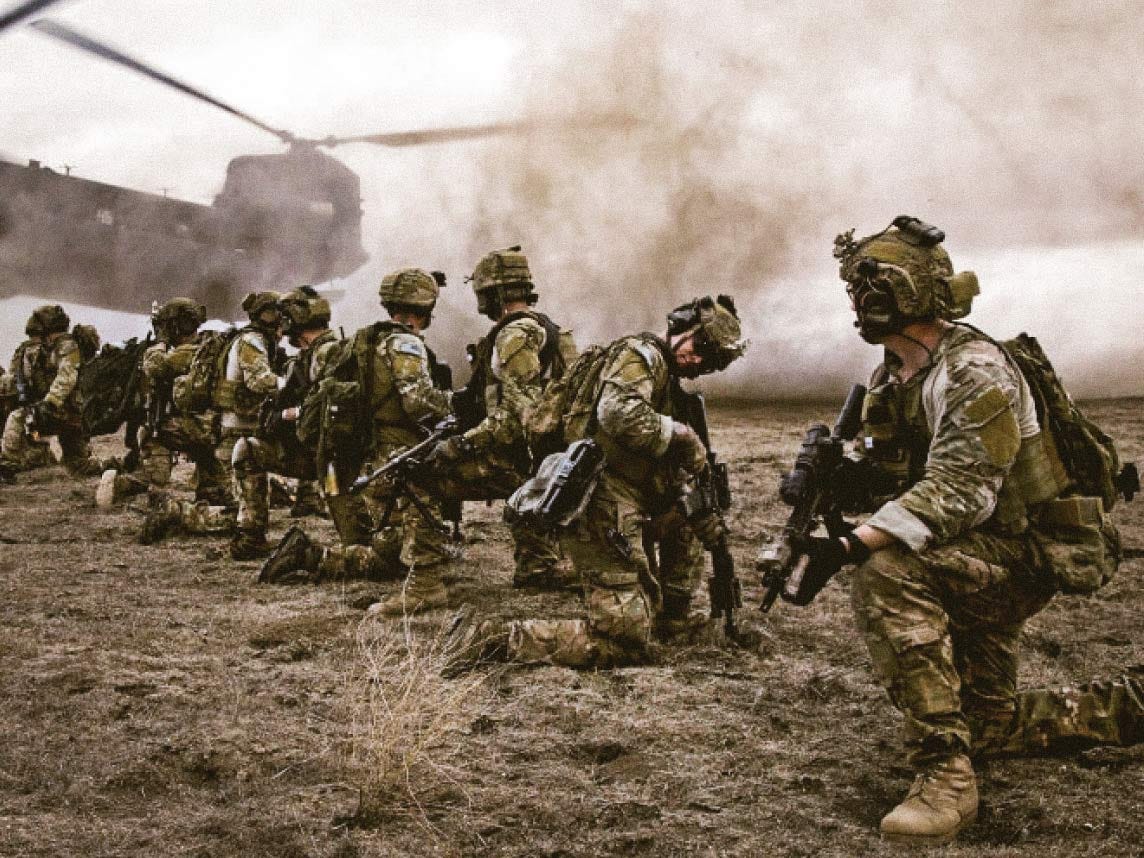
Instead of a battalion of 20 junior analysts, firms will deploy small, elite “pods” composed of 2 senior architects, 3 AI-augmented specialists, and a couple of junior. These specialists will operate within an AI Exoskeleton intended as a suite of tools that allows a single human to process an entire corporation’s financial data and suggest a restructuring plan in half the time it used to take pre-AI.
Normal troops are slow to deploy and expensive to maintain, but Special Ops teams are precise and devastatingly effective. If a task can be performed by standard troops, it will be eventually automated, but surgical precision and high-stakes thinking will be handled by the elite.
Solutions + Accountability
If your work is automatable, you must move up the value chain. Professional services are no longer about “implementing technology”; they are about owning the reinvention of business itself.
This is the final transition from the era of information to the era of accountability. As the cost of executing complexity falls toward zero, the value of defining purpose rises toward infinity.
The machine can perform almost any task with near-perfect precision: the only remaining scarcity is the courage to define the objective and the wisdom to navigate the human consequences of change.
Please read the quote above again.
We will have to keep selling solutions, yes, but also possess the architectural vision to build the future alongside our clients, assuming the full weight of the outcomes we co-create.
As usual, if you enjoy reading Consulting Intel, please do me a favor: spread the word and share this post.
👋
👀 Links of interest
A few corners of the internet you may find interesting:
I recently read this post by Grant Varner and I found it though-provoking. He writes: “You can accomplish virtually anything with continuous improvement and time”. You should read everything Grant writes too!
My first book Beyond Slides became a #1 Amazon Best Seller in the USA, UK, Australian and Italy. This is a message I received the other day from a new reader:

Have you looked into the Leaders Toolkit? It is a deck of 52 tools, frameworks and mental models to make you a better leader (use code CONSULTANT10 for 10% off);
The Consulting Intel private Discord group with 250+ global members is where consultants meet to discuss and support each other (it’s free).


Thank you for featuring my post on Continuous Improvement!
I’m still finding my voice online, so if anyone’s curious to follow the journey, please subscribe 😀
Intersting thought, but I think you missed one. The remuneration structure esp the cherished parter modell with all it entails. Without adjusting that many of your mentioned areas won’t change